
Indian street food has become one of the most popular cuisines around the world. You can easily find it in cities across the globe such as London, New York, and even in popular tourist spots like Bali. A Medium article even describes it as a massive, multi-billion-dollar culinary culture that feeds hundreds of millions daily.
What makes these dishes so distinctive? Let’s dig into it.
The Authentic Flavor of Indian Street Food
Indian street food is famous because of its bold spices, unique textures, and affordable prices. These qualities make every bite flavorful without making it difficult to enjoy regularly. People also often call its flavor truly authentic. But what does that word really mean? Where does this sense of authenticity actually come from?
The answer lies in centuries of history. Authentic flavor is rooted in India’s diverse regional traditions, local ingredients, and time-honored cooking methods. Recipes have evolved through generations while retaining distinctive combinations of sweet, spicy, tangy, salty, and savory flavors.
Fresh herbs, chutneys, and spices such as cumin, coriander, turmeric, and chaat masala add further layers. The result is not simply strong seasoning, but a balance of flavors and textures that reflects India’s culinary heritage.
The Culture That Gives It Soul
Authentic flavor is not the only thing that makes Indian street food so fascinating. It is also deeply connected to India’s diverse culture, regional traditions, and everyday life. Each region has its own specialties, ingredients, and ways of preparing food, creating a culinary scene that reflects the country’s diversity.
The culture becomes even more visible on the streets. Food stalls bring together locals, workers, travelers, and families over simple yet flavorful meals. Vendors often preserve traditional recipes while adapting them to changing tastes.
The experience is also about more than what is on the plate. The sizzling sounds, colorful displays, tempting aromas, and interaction with vendors create a lively atmosphere around each dish. This combination of food, tradition, and social connection makes trying Indian street food feel like experiencing a small part of India itself.
The Must-Try Dishes
Indian street food offers so many options that trying everything is nearly impossible. If you do not have time to try everything, these are the must-try dishes:
- Pani Puri: Crispy hollow puris filled with potato and chickpeas, then served with tangy spiced water. It delivers a refreshing burst of flavor in every bite.
- Samosa: A crispy pastry filled with spiced potato, vegetables, or chicken. It is savory, satisfying, and easy to enjoy as a snack.
- Pav Bhaji: A buttery vegetable mash served with soft bread rolls, hearty enough to double as a full meal.
- Thali: A colorful platter combining curries, snacks, rice, and sides. It is ideal for sampling several flavors in one meal.
Authentic Indian Flavors in Ubud
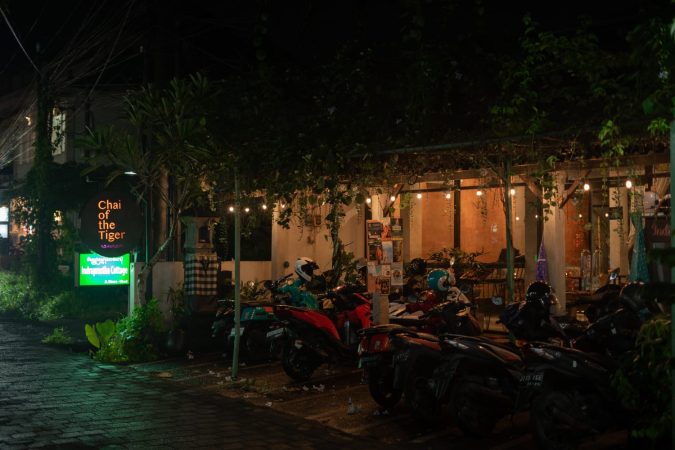
During my recent trip to Bali, I visited an Indian street food cafe that served authentic and flavorful dishes. The spot was tucked along Jalan Sukma in Ubud, called Chai of the Tiger. It serves classics like samosas, pani puri, aloo chaat, and roti wraps, alongside lassi in flavors like watermelon and mango.
What stood out was how close the flavors stayed to the real thing. Spicy, tangy, and layered exactly the way street stalls back in India get it right.
The vibe also felt less like a restaurant and more like a gathering spot for travelers. People linger over board games and chai, swapping stories over bold food. For anyone chasing real Indian street food in Bali, this café is the perfect stop. You can find it at Jl. Sukma Kesuma No.25, Peliatan, Kecamatan Ubud, Kabupaten Gianyar, Bali 80571.